Description: Practice Class 11 Physics Chapter 1 Physical Quantities and Measurement MCQs according to the FBISE HSSC-I syllabus. These exam-oriented questions cover SI units, derived units, dimensions, dimensional analysis, prefixes, accuracy, precision, errors, uncertainty, and significant figures.
A. a numerical value only B. a unit only C. a numerical value and a unit D. a symbol only
2. The SI system is based on
A. five base quantities B. seven base quantities C. nine base quantities D. ten base quantities
3. The SI base unit of length is
A. centimetre B. kilometre C. metre D. millimetre
4. The SI base unit of mass is
A. gram B. kilogram C. tonne D. milligram
5. The SI base unit of time is
A. minute B. hour C. second D. day
6. The SI base unit of electric current is
A. volt B. coulomb C. ampere D. ohm
7. The SI base unit of thermodynamic temperature is
A. degree Celsius B. kelvin C. joule D. calorie
8. The SI base unit of amount of substance is
A. mole B. gram C. litre D. candela
9. The SI base unit of luminous intensity is
A. lux B. lumen C. candela D. watt
10. The SI unit of force is
A. joule B. newton C. pascal D. watt
11. One newton is equivalent to
A. kg m s B. kg m s C. kg m s D. kg m s
12. The SI unit of energy is
A. newton B. joule C. watt D. pascal
13. The SI unit of power is
A. joule B. newton C. watt D. coulomb
14. The SI unit of pressure is
A. N m B. N m C. N m D. N m
15. The SI unit of density is
A. kg m B. kg m C. kg m D. kg m
16. The dimensions of velocity are
A. B. C. D.
17. The dimensions of acceleration are
A. B. C. D.
18. The dimensions of force are
A. B. C. D.
19. The dimensions of work are
A. B. C. D.
20. The dimensions of power are
A. B. C. D.
21. The dimensions of pressure are
A. B. C. D.
22. The dimensions of momentum are
A. B. C. D.
23. A physical equation is dimensionally homogeneous when
A. only numbers on both sides are equal B. dimensions of both sides are the same C. units are different on both sides D. all quantities are dimensionless
24. Dimensional analysis can be used to
A. determine the exact numerical constant in every formula B. check dimensional consistency C. measure temperature directly D. replace all experiments
25. Which quantity is dimensionless?
A. velocity B. force C. strain D. momentum
26. The dimensions of gravitational acceleration are
A. B. C. D.
27. If , the dimensions of every term are
A. B. C. D.
28. The prefix kilo (k) represents
A. B. C. D.
29. The prefix mega (M) represents
A. B. C. D.
30. The prefix giga (G) represents
A. B. C. D.
31. The prefix milli (m) represents
A. B. C. D.
32. The prefix micro () represents
A. B. C. D.
33. The prefix nano (n) represents
A. B. C. D.
34. The prefix pico (p) represents
A. B. C. D.
35. One kilometre is equal to
A. m B. m C. m D. m
36. One micrometre is equal to
A. m B. m C. m D. m
37. Accuracy refers to
A. closeness to the true value B. repeatability only C. size of the instrument D. number of readings
38. Precision refers mainly to
A. closeness to the true value only B. agreement among repeated measurements C. unit conversion D. zero error only
39. A measurement can be
A. accurate but not precise B. precise but not accurate C. both accurate and precise D. all of these
40. Random errors can generally be reduced by
A. taking repeated measurements and averaging B. changing the unit C. ignoring readings D. using fewer observations
41. A systematic error is typically
A. randomly positive and negative each time B. consistent or repeatable in one direction C. always zero D. caused only by calculation
42. The smallest measurement that an instrument can reliably resolve is related to its
A. range B. least count C. mass D. colour
43. If a ruler has markings every mm, its least count is
A. cm B. mm C. mm D. mm
44. A zero error is an example of
A. systematic error B. random error only C. dimensional error D. unit error
45. If a measured length is cm, the fractional uncertainty is
A. B. C. D.
46. If a quantity is , its percentage uncertainty is
A. B. C. D.
47. For addition or subtraction, absolute uncertainties are generally
A. multiplied B. divided C. added D. squared
48. For a product or quotient, fractional uncertainties are generally
A. added B. subtracted C. ignored D. multiplied by zero
49. The number of significant figures in without a decimal point is
A. always exactly 4 B. always exactly 3 C. ambiguous without further notation D. 1
FBISE syllabus: National Curriculum of Pakistan 2022–23, FBISE Assessment Framework for Physics Grade XI.
Content area: Domain A – Measurements
Relevant SLOs: P-11-A-01 to P-11-A-07
Alignment: Estimation of physical quantities; derived SI units; dimensional homogeneity and dimensional formulae; accuracy and precision; uncertainty in measurements and derived quantities.
Assessment note: The FBISE framework distinguishes summative SLOs used in the final examination from formative SLOs used in teaching-learning. MCQs on this page should be treated as practice aligned to the listed content/SLOs, not as a reproduction of the official FBISE paper.


 s


 are
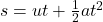 , the dimensions of every term are


 ) represents

 mm, its least count is
 mm
 mm
 cm, the fractional uncertainty is


 , its percentage uncertainty is


 without a decimal point is
 , where

 , where


 only