Practice 50 exam-oriented MCQs covering sequences and series, arithmetic and geometric progressions, means, summation and infinite geometric series for FBISE HSSC-I Mathematics.
1. A sequence is an ordered list of numbers formed according to a:
A) A) Rule or pattern B) B) Random selection C) C) Single constant only D) D) Geometric figure
2. The numbers occurring in a sequence are called its:
A) A) Factors B) B) Terms C) C) Coefficients D) D) Variables
3. The notation
A) A) First term only B) B) nth term of a sequence C) C) Sum of all terms D) D) Common difference only
4. The sequence 2, 4, 6, 8, … is:
A) A) Decreasing B) B) Constant C) C) Increasing D) D) Alternating
5. The sequence 10, 8, 6, 4, … has common difference:
A) A) 2 B) B) −2 C) C) 4 D) D) −4
6. An arithmetic sequence is a sequence in which the difference between consecutive terms is:
A) A) Variable B) B) Zero only C) C) Constant D) D) Always positive
7. The constant difference in an arithmetic sequence is called the:
A) A) Common ratio B) B) Common difference C) C) nth term D) D) First difference only
8. The nth term of an arithmetic sequence is:
9. In the arithmetic sequence 5, 8, 11, 14, …, the first term is:
A) A) 3 B) B) 5 C) C) 8 D) D) 11
10. In the arithmetic sequence 5, 8, 11, 14, …, the common difference is:
A) A) 2 B) B) 3 C) C) 4 D) D) 5
11. The 10th term of the arithmetic sequence 2, 5, 8, … is:
A) A) 26 B) B) 27 C) C) 29 D) D) 32
12. If the first term of an arithmetic sequence is 7 and the common difference is 4, its nth term is:
13. If
A) A) 2 B) B) 3 C) C) 5 D) D) 6
14. If
A) A) 2 B) B) 3 C) C) 5 D) D) 6
15. The arithmetic mean between two numbers
16. The arithmetic mean between 6 and 14 is:
A) A) 8 B) B) 9 C) C) 10 D) D) 11
17. If three arithmetic means are inserted between 2 and 18, the resulting arithmetic sequence has:
A) A) 3 terms B) B) 4 terms C) C) 5 terms D) D) 6 terms
18. If 4 arithmetic means are inserted between 5 and 30, the common difference of the resulting sequence is:
A) A) 4 B) B) 5 C) C) 6 D) D) 7
19. The sum of the first n terms of an arithmetic sequence is:
20. The sum of the first 10 positive integers is:
A) A) 45 B) B) 50 C) C) 55 D) D) 60
21. The sum of the first 20 terms of an arithmetic sequence with
A) A) 420 B) B) 430 C) C) 440 D) D) 460
22. A geometric sequence is a sequence in which the ratio of consecutive terms is:
A) A) Constant B) B) Always zero C) C) Always one D) D) Variable
23. The constant ratio in a geometric sequence is called the:
A) A) Common difference B) B) Common ratio C) C) Arithmetic mean D) D) nth term
24. The nth term of a geometric sequence is:
25. The common ratio of 3, 6, 12, 24, … is:
A) A) 1 B) B) 2 C) C) 3 D) D) 4
26. The 6th term of the geometric sequence 2, 4, 8, … is:
A) A) 16 B) B) 24 C) C) 32 D) D) 64
27. If a geometric sequence has first term 5 and common ratio 3, its nth term is:
28. The geometric mean between two positive numbers
29. The geometric mean between 4 and 16 is:
A) A) 6 B) B) 8 C) C) 10 D) D) 12
30. If
A) A) 8 B) B) 9 C) C) 10 D) D) 12
31. The sum of the first n terms of a geometric sequence, when
32. The sum of the first 5 terms of 2, 4, 8, 16, … is:
A) A) 30 B) B) 31 C) C) 62 D) D) 64
33. For a finite geometric series, if
A) A) 0
B) B) a
C) C)
D) D)
34. An infinite geometric series has a finite sum when:
35. The sum to infinity of a convergent geometric series is:
36. The sum to infinity of
A) A) 1 B) B) 2 C) C) 3 D) D) 4
37. The series
A) A) 0 B) B) 1 C) C) −1 D) D) 2
38. The infinite geometric series with
A) A) 6 B) B) 8 C) C) 9 D) D) 12
39. A series is obtained when the terms of a sequence are:
A) A) Multiplied by zero B) B) Added together C) C) Arranged alphabetically D) D) Divided by n
40. The notation
A) A) Product of the first n integers B) B) Sum of the first n integers C) C) nth term only D) D) Difference of consecutive integers
41. The value of
A) A) 10 B) B) 12 C) C) 15 D) D) 20
42. The formula for the sum of the first n natural numbers is:
43. The sum of the first n odd positive integers is:
44. The sum of the first n even positive integers is:
45. The sum
A) A) 20 B) B) 25 C) C) 30 D) D) 35
46. If three consecutive terms of an arithmetic sequence are
A) A) The arithmetic mean of the other two B) B) Their product C) C) Their difference D) D) Always zero
47. If three consecutive positive terms of a geometric sequence are
48. If
A) A) 6 only B) B) 9 only C) C) 6 or −6 D) D) 8 or −8
49. The sequence
A) A) Arithmetic B) B) Geometric C) C) Neither arithmetic nor geometric D) D) Constant
50. In an arithmetic sequence, if
A) A) The nth term from another known term B) B) Only the common ratio C) C) The determinant D) D) The inverse matrix
Show Result Try Again
Syllabus & SLO Alignment
Syllabus coverage: This chapter focuses on sequences and series, arithmetic and geometric sequences, nth-term formulas, arithmetic and geometric means, finite arithmetic and geometric series, summation notation, standard sums and the sum to infinity of a convergent geometric series.
SLO alignment: The MCQs emphasize recognizing sequence patterns, determining nth terms and common differences or ratios, inserting arithmetic and geometric means, calculating finite sums, using sigma notation and evaluating convergent infinite geometric series. Questions include direct formula use as well as exam-oriented conceptual and numerical applications.
 usually represents the:



 , then the first term is:
 and
 is:



 and
 is:


 is the geometric mean between 4 and 25, then
 , is:
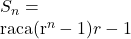



 , the sum of n terms is:


 is:
 has common ratio:
 and
 has sum:
 represents:
 is:


 is:
 , their middle term is:
 , then:


 are consecutive terms of a geometric sequence, then x can be:
 is:
 , this relation is useful for finding: