Description: Practice Class 11 Physics Chapter 3 Translatory Motion MCQs according to the FBISE HSSC-I syllabus. These exam-oriented questions cover displacement, velocity, acceleration, equations of motion, free fall, projectile motion, air resistance, momentum, impulse, and collisions.
1. Transl\
A. Every point of the body moves through the same displacement B. The body must rot\ C. Only one point moves D. The body remains \
2. The position of an object is specified rel\
A. Mass B. Reference point or frame C. Force D. Temper\
3. Distance is a
A. Vector quantity B. Scalar quantity C. Dimensionless quantity D. Tensor quantity
4. Displacement is a
A. Scalar quantity B. Vector quantity C. Constant quantity only D. Unitless quantity
5. The SI unit of displacement is
A. Second B. Metre C. Newton D. Metre per second
6. Average speed is
A. Total displacement/total time B. Total distance/total time C. Change in velocity/time D. Distance multiplied by time
7. Average velocity is
A. Total distance/time B. Total displacement/time C. Speed multiplied by time D. Acceler\
8. If an object returns to its starting point, its displacement is
A. Equal to distance travelled B. Zero C. Always positive D. Always neg\
9. The slope of a position-time graph represents
A. Acceler\ B. Velocity C. Force D. Momentum
10. The slope of a velocity-time graph represents
A. Displacement B. Acceler\ C. Distance D. Momentum
11. The area under a velocity-time graph represents
A. Acceler\ B. Displacement C. Force D. Speed only
12. The area under a speed-time graph represents
A. Distance travelled B. Acceler\ C. Velocity D. Force
13. For uniform motion, an object covers
A. Equal distances in equal intervals of time B. Unequal distances in equal intervals C. Zero distance D. Equal distances only in unequal intervals
14. For an object \
A. 1 \ B. Zero C. Maximum D. Neg\
15. The SI unit of velocity is
A. \ B. \ C. N D. J
16. Acceler\
A. Position B. Velocity C. Distance D. Mass
17. The SI unit of acceler\
18. Velocity changes from 10 to 20 \
A. 1 \ B. 2 \ C. 5 \ D. 10 \
19. An object moving with constant velocity has
A. Constant non-zero acceler\ B. Zero acceler\ C. Increasing acceler\ D. Decreasing mass
20. The first equ\
A. \ B. s=ut+\ C. v=u+st D. a=v/t^2
21. The second equ\
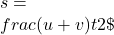
A. \ B. s=vt+1/2 \ C. s=u+\ D. s=\
22. The third equ\
A. \ B. v=u^2+2as C. v^2=u+2as D. v=u+2as^2
23. The equ\
A. Acceler\ B. Mass is zero C. Force is zero only D. Motion is circular only
24. If an object starts from rest, its initial velocity is
A. 1 \ B. Zero C. Equal to acceler\ D. Equal to distance
25. For an object starting from rest with acceler\
A. \ B. a/t C. t/a D. a+t
26. An object starts from rest with acceler\
A. 2 \ B. 5 \ C. 10 \ D. 25 \
27. An object starts from rest with acceler\
A. 10 m B. 20 m C. 25 m D. 50 m
28. If u=10 \
A. 12 \ B. 15 \ C. 20 \ D. 25 \
29. If u=20 \
A. 4 s B. 5 s C. 10 s D. 80 s
30. Neg\
A. Positive velocity B. Retard\ C. Uniform speed D. Displacement
31. For vertical motion near Earth, acceler\
A. Upward B. Downward C. Horizontally D. Towards east
32. Neglecting air resistance, free-fall acceler\
A. Zero B. Constant, about 9.8 \ C. Increasing with time D. Dependent on mass
33. Two bodies of different masses dropped from the same height in vacuum reach the ground
A. At different times because of mass B. At the same time C. Only if masses are equal D. With different acceler\
34. For an object projected vertically upward, velocity \
A. Maximum B. Zero C. Equal to g D. Neg\
35. At the highest point of vertical upward motion, acceler\
A. Zero B. About 9.8 \ C. Upward D. Dependent on mass
36. Time of flight for vertical projection upward with speed u is
A. \ B. 2\ C. g/u D. u^2/g
37. Maximum height for vertical projection upward with speed u is
A. \ B. \ C. 2u^2/g D. g/u^2
38. A projectile is an object moving under the influence of
A. Gravity only when air resistance is neglected B. Mass only C. Horizontal force only D. Friction only
39. In ideal projectile motion, horizontal velocity is
A. Constant B. Zero throughout C. Continuously increasing D. Continuously decreasing
40. In ideal projectile motion, vertical acceler\
A. Zero B. Constant downward acceler\ C. Constant upward acceler\ D. Dependent on horizontal velocity
41. The p\
A. A straight line B. A parabola C. A circle D. An ellipse
42. For a projectile launched \
A. \ B. \ C. u tan(theta) D. u/cos(theta)
43. For the same projectile, vertical initial velocity is
A. \ B. \ C. u tan(theta) D. u/sin(theta)
44. For same-level launch and landing, projectile range is
45. For a given initial speed and same launch/landing level, maximum range occurs \
A. 30 degrees B. 45 degrees C. 60 degrees D. 90 degrees
46. Two launch angles th\
A. Equal angles only B. Complementary angles C. Supplementary angles D. Always 90 degrees apart
47. Air resistance generally causes a projectile to have
A. Gre\ B. Reduced range compared with ideal motion C. No acceler\ D. Constant vertical velocity
48. In a one-dimensional collision, momentum is conserved when
A. The system is isol\ B. Objects have equal masses only C. The collision is always elastic D. Velocities are equal
49. An elastic collision is one in which
A. Only mass is conserved B. Kinetic energy and momentum are conserved C. Only velocity is conserved D. Kinetic energy is completely lost
50. Impulse is equal to
A. Change in momentum B. Change in displacement C. Force divided by time D. Mass divided by velocity
Show Result Try Again
Syllabus & SLO Alignment
FBISE syllabus: National Curriculum of Pakistan 2022–23, FBISE Assessment Framework for Physics Grade XI.
Content area: Domain B – Mechanics
Relevant SLOs: P-11-B-03 to P-11-B-06
Alignment: Equations of uniformly accelerated motion; solving motion problems; projectile motion without air resistance; qualitative effects of air resistance.
Assessment note: The FBISE framework distinguishes summative SLOs used in the final examination from formative SLOs used in teaching-learning. MCQs on this page should be treated as practice aligned to the listed content/SLOs, not as a reproduction of the official FBISE paper.
 ory motion is motion in which
 B. ZeroC. MaximumD. Neg\
 C. ND. J
 \\)B. s=ut+\
 ^2\\)B. s=vt+1/2 \
 B. v=u^2+2asC. v^2=u+2asD. v=u+2as^2
 applies when
 B. 2\
 C. 2u^2/gD. g/u^2
 B. \
 C. u tan(theta)D. u/cos(theta)
 B. R=\
 C. R=\
 D. R=\
