Description: Practice Class 12 Physics Chapter 17 Simple Harmonic Motion MCQs according to the FBISE HSSC-II assessment framework. These questions cover SHM equations, displacement, velocity, acceleration, energy, spring-mass systems, simple pendulums, damping, forced oscillations and resonance.
1. Simple harmonic motion is a type of oscillatory motion in which the restoring acceleration is:
A) constant B) proportional to displacement and directed towards the equilibrium position C) proportional to velocity D) independent of displacement
2. The displacement of a particle executing SHM is measured from its:
A) mean or equilibrium position B) maximum position only C) starting point only D) highest point
3. In SHM, the restoring force is proportional to the:
A) square of displacement B) velocity C) displacement from equilibrium D) time only
4. The acceleration in SHM is related to displacement
5. The negative sign in
A) towards the equilibrium position B) away from equilibrium C) in the direction of velocity always D) upward always
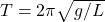
6. The angular frequency of an oscillator is related to its period by:
7. The SI unit of angular frequency is:
A) hertz B) second C) radian per second D) metre per second
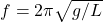
8. The frequency
9. The period of an oscillator is the time required for:
A) one complete oscillation B) half an oscillation only C) maximum displacement D) zero displacement only
10. Frequency is defined as the number of complete oscillations made per:
A) minute B) second C) hour D) cycle
11. The SI unit of frequency is:
A) second B) radian C) metre D) hertz
12. For a particle in SHM, the displacement varies with time as a:
A) linear function B) constant function C) sinusoidal function D) random function
13. A possible displacement equation for SHM is:
14. In the expression
A) period B) frequency C) amplitude D) phase only
15. The maximum displacement of a particle from its equilibrium position is called:
A) frequency B) amplitude C) period D) phase
16. The phase constant in SHM determines the:
A) mass of oscillator B) angular frequency only C) maximum speed only D) initial phase or initial conditions
17. At the equilibrium position of an ideal SHM oscillator, the displacement is:
A) zero B) maximum C) minimum negative D) equal to amplitude
18. At maximum displacement in SHM, the instantaneous velocity is:
A) maximum B) constant C) zero D) infinite
19. At the equilibrium position in SHM, the speed is:
A) zero B) maximum C) minimum but non-zero D) undefined
20. For an ideal SHM oscillator, the magnitude of acceleration is maximum at:
A) equilibrium position B) half amplitude C) one-quarter amplitude D) maximum displacement
21. At the equilibrium position, the acceleration of an ideal SHM particle is:
A) zero
B) maximum
C) infinite
D) equal to
22. The maximum speed of a particle in SHM is:
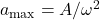
23. The maximum acceleration in SHM is:
24. If the amplitude of an SHM oscillator is doubled while angular frequency remains constant, its maximum speed:
A) halves B) remains unchanged C) becomes four times D) doubles
25. If the amplitude is doubled and angular frequency is unchanged, maximum acceleration:
A) doubles B) halves C) becomes four times D) remains unchanged
26. The speed-displacement relation for SHM is:
27. At displacement
28. At displacement
29. The total mechanical energy of an ideal SHM oscillator is proportional to:
A) the square of amplitude B) amplitude only C) frequency only D) period only
30. The total energy of a mass-spring oscillator is:
31. For a spring-mass oscillator, the angular frequency is:
32. The period of a mass-spring system is:
33. If the mass attached to a spring is increased, the period:
A) increases B) decreases C) remains unchanged D) becomes zero
34. If the spring constant is increased, the period of a mass-spring system:
A) increases B) remains unchanged C) decreases D) becomes infinite
35. For an ideal mass-spring oscillator, the period is independent of:
A) mass B) amplitude C) spring constant D) angular frequency
36. The spring constant
A) mass of spring B) energy of spring C) frequency of spring D) stiffness of the spring
37. The SI unit of spring constant is:
A) N/m B) N m C) J/m D) kg/m
38. A simple pendulum performs approximately SHM when its angular displacement is:
A) very large
B) exactly
C) small
D) always zero
39. The period of a simple pendulum of length
40. The period of a simple pendulum is independent of its:
A) length
B) local gravitational field strength
C) value of
D) mass of the bob
41. If the length of a simple pendulum is quadrupled, its period becomes:
A) twice as large B) four times as large C) half as large D) unchanged
42. If
A) increases B) remains constant C) decreases D) becomes infinite
43. The frequency of a simple pendulum is:
44. At the extreme position of a pendulum bob, its kinetic energy is:
A) maximum B) equal to total energy C) negative D) zero
45. At the mean position of an ideal pendulum, its kinetic energy is:
A) maximum B) zero C) minimum but non-zero D) undefined
46. In ideal SHM, the total mechanical energy is:
A) continuously lost B) zero C) constant D) proportional to time
47. During SHM, energy continuously changes between:
A) heat and light B) kinetic and potential energy C) mass and charge D) electric and nuclear energy
48. At maximum displacement, the potential energy of an ideal oscillator is:
A) zero B) negative C) minimum D) maximum
49. At equilibrium, the potential energy of a spring oscillator is:
A) minimum B) maximum C) infinite D) equal to kinetic energy in every case
50. Damping in an oscillator causes its amplitude to:
A) increase B) remain constant forever C) decrease with time D) become negative
Show Result Try Again
Syllabus & SLO Alignment
FBISE syllabus: National Curriculum of Pakistan 2022–23, FBISE Assessment Framework for Physics Grade XII.
Content area: Domain D – Waves
Relevant SLOs: P-12-D-01 to P-12-D-19
Alignment: Oscillation terminology and SHM equations; velocity, acceleration and energy in SHM; spring and pendulum systems; damping, forced oscillations and resonance.
Assessment note: The FBISE framework distinguishes summative SLOs used in the final examination from formative SLOs used in teaching-learning. MCQs on this page should be treated as practice aligned to the listed content/SLOs, not as a reproduction of the official FBISE paper.
 by:


 and angular frequency
 are related by:


 represents the:
 always




 , the speed of an SHM particle is:


 , the speed is:


 measures the:

 for small oscillations is: