Description: Practice Class 12 Physics Chapter 15 Gravitational Potential MCQs according to the FBISE HSSC-II assessment framework. These questions cover gravitational field strength, field lines, Newton’s law of gravitation, circular orbits, geostationary satellites, gravitational potential and gravitational potential energy.
1. The gravitational field strength at a point is defined as the gravitational force per unit:
A) energy B) mass C) volume D) time
2. The SI unit of gravitational field strength is:
A) J/kg² B) N m C) kg/N D) N/kg
3. The gravitational field strength due to a point mass at distance is:
A) B) C) D)
4. The direction of gravitational field strength is the direction of force on a:
A) positive test charge B) magnetic pole C) small test mass D) photon
5. The gravitational field around an isolated spherical mass, outside the sphere, is equivalent to that of a:
A) uniform sheet B) point mass concentrated at its centre C) hollow shell with zero mass D) line of mass
6. If the distance from a point mass is doubled, the gravitational field strength becomes:
A) four times B) twice C) unchanged D) one-fourth
7. If the mass producing a gravitational field is doubled at the same distance, the field strength:
A) doubles B) halves C) becomes four times D) is unchanged
8. Gravitational field lines around an isolated point mass are:
A) parallel straight lines B) circular around the mass C) radial and directed towards the mass D) randomly oriented
9. Gravitational field lines for two isolated masses do not:
A) end at the masses B) cross one another C) point inward D) represent field direction
10. The gravitational force between two point masses is given by:
A) B) C) D)
11. Newton’s law of gravitation shows that gravitational force varies with separation as:
A) B) C) D)
12. If the separation between two masses is tripled, the gravitational force becomes:
A) three times B) one-third C) one-ninth D) nine times
13. The gravitational force between two masses is always:
A) repulsive B) attractive C) zero D) electrical
14. The gravitational constant is approximately:
A) B) C) D)
15. The gravitational field strength near Earth’s surface is approximately:
A) B) C) D)
16. Near Earth’s surface, the weight of a mass is:
A) B) C) D)
17. For a small change in height near Earth’s surface, is approximately constant because:
A) Earth’s mass changes B) the change in distance from Earth’s centre is small compared with Earth’s radius C) gravity disappears at small heights D) the value of changes
18. As altitude above Earth’s surface increases, gravitational field strength:
A) increases linearly B) remains exactly constant C) becomes negative D) decreases
19. At the centre of a spherically symmetric Earth model, the gravitational field strength is:
A) zero B) maximum C) equal to D) infinite
20. A satellite in a circular orbit is kept in orbit by:
A) electric force B) friction C) gravitational force providing centripetal force D) magnetic force
21. For a circular satellite orbit, gravitational force provides the required:
A) linear acceleration only B) centripetal force C) electric potential D) escape energy only
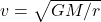
22. For a circular orbit of radius , the orbital speed of a satellite around mass is:
A) B) C) D)
23. If the orbital radius of a satellite increases, its circular orbital speed:
A) decreases B) increases C) remains unchanged D) becomes zero
24. A geostationary satellite has an orbital period of approximately:
A) 12 hours B) 6 hours C) 24 hours D) 48 hours
25. A geostationary satellite must orbit:
A) from east to west B) from west to east C) from north to south D) in any direction
26. A geostationary satellite must orbit directly above the:
A) North Pole B) South Pole C) Tropic of Cancer D) Equator
27. A geostationary satellite appears stationary relative to a point on Earth because its:
A) orbital period equals Earth’s rotation period B) mass equals Earth’s mass C) speed is zero D) height is zero
28. A geostationary orbit is in the plane of Earth’s:
A) polar axis B) surface only C) equator D) orbit around the Sun
29. The gravitational potential at a point is defined as the work done per unit mass in bringing a small test mass from:
A) Earth’s centre B) infinity to the point C) the point to infinity only D) the surface to the point
30. The conventional gravitational potential at infinity is taken as:
A) 1 J/kg B) C) positive infinity D) zero
31. The gravitational potential due to a point mass at distance is:
A) B) C) D)
32. Gravitational potential is a:
A) vector quantity B) tensor quantity C) scalar quantity D) dimensionless quantity
33. The SI unit of gravitational potential is:
A) N/kg B) J/kg C) kg/J D) N m²/kg
34. The gravitational potential outside a spherical mass is:
A) always positive B) always zero C) independent of distance D) negative when zero potential is defined at infinity
35. As distance from a point mass increases, the magnitude of negative gravitational potential:
A) decreases B) increases C) remains constant D) becomes infinite
36. At infinity, the gravitational potential due to an isolated mass approaches:
A) B) C) zero D) positive infinity
37. The gravitational potential energy of two point masses and separated by is:
A) B) C) D)
38. The gravitational potential energy of two attracting masses is negative when zero energy is chosen at:
A) Earth’s surface B) the centre of Earth C) one metre separation D) infinity
39. If two masses are moved farther apart, their gravitational potential energy:
A) increases towards zero B) becomes more negative C) remains constant D) becomes infinite
40. If two masses are brought closer together, their gravitational potential energy:
A) increases towards zero B) becomes positive C) becomes more negative D) remains zero
41. The relationship between gravitational potential energy and gravitational potential for mass is:
A) B) C) D)
42. A mass moved between two points in a gravitational field experiences a change in gravitational potential energy equal to:
A) mass divided by potential difference B) potential multiplied by distance only C) gravitational field strength divided by mass D) mass multiplied by the change in gravitational potential
43. The work done by gravity on a mass moving to a lower gravitational potential is generally:
A) positive B) negative C) zero always D) infinite
44. The work done by an external agent in slowly moving a mass upward against gravity is related to the:
A) decrease in kinetic energy only B) decrease in mass C) increase in gravitational potential energy D) change in charge
45. For a satellite in a circular orbit, its gravitational potential energy is:
A) positive B) negative C) zero D) independent of radius
46. The total mechanical energy of a satellite in a circular orbit is:
A) positive and equal to its potential energy B) zero for every orbit C) equal to its kinetic energy D) negative
47. For a circular satellite orbit, the magnitude of gravitational potential energy is:
A) twice the kinetic energy B) equal to the kinetic energy C) half the kinetic energy D) four times the kinetic energy
48. The total energy of a satellite in a circular orbit can be written as:
A) B) C) D)
49. The escape speed from a planet is the minimum speed needed to:
A) enter a circular orbit B) escape the planet’s gravitational field and reach infinity with zero final speed C) remain above the equator D) make gravity zero at the surface
50. The escape speed from a spherical body of mass and radius is:
FBISE syllabus: National Curriculum of Pakistan 2022–23, FBISE Assessment Framework for Physics Grade XII.
Content area: Domain B – Mechanics
Relevant SLOs: P-12-B-01 to P-12-B-09
Alignment: Gravitational field strength; Newton’s law of gravitation; gravitational potential and potential energy; circular orbits; geostationary satellites and escape speed.
Assessment note: The FBISE framework distinguishes summative SLOs used in the final examination from formative SLOs used in teaching-learning. MCQs on this page should be treated as practice aligned to the listed content/SLOs, not as a reproduction of the official FBISE paper.
 at distance
 is:








 is approximately:







 of a mass
 is:


 is approximately constant because:








 and gravitational potential
 for mass






 is:



